


Learning how to support a loved one with ALS
Becoming a caregiver is rarely something you plan for. In many cases, this role comes progressively, as needs evolve and new challenges arise. For Nathalie, this reality began in 2025 when her partner Sylvain received an Amyotrophic lateral sclerosis (ALS) diagnosis.
Like many families touched by ALS, hearing the diagnosis was devastating.
“It was a huge shock. We were both going through a very difficult time,” Nathalie recalls.
Despite the shock, an instinct kicked in for Nathalie: the instinct to support her husband through the challenges of his illness and to stay by his side every step of the way.
As part of National Caregivers Week, discover Nathalie and Sylvain’s journey with ALS. Their story reflects the challenges of caregiving within a couple, but also the strength of mutual support, adaptation, and the love that continues to unite them.
Adapting to life with ALS
Since the diagnosis, Nathalie and Sylvain learned to live with this new reality of being in constant change. As the disease progresses, needs evolve and daily life requires constant adaptation.
“With ALS, what’s true today may not be true tomorrow. You have to keep adapting,” Nathalie says.
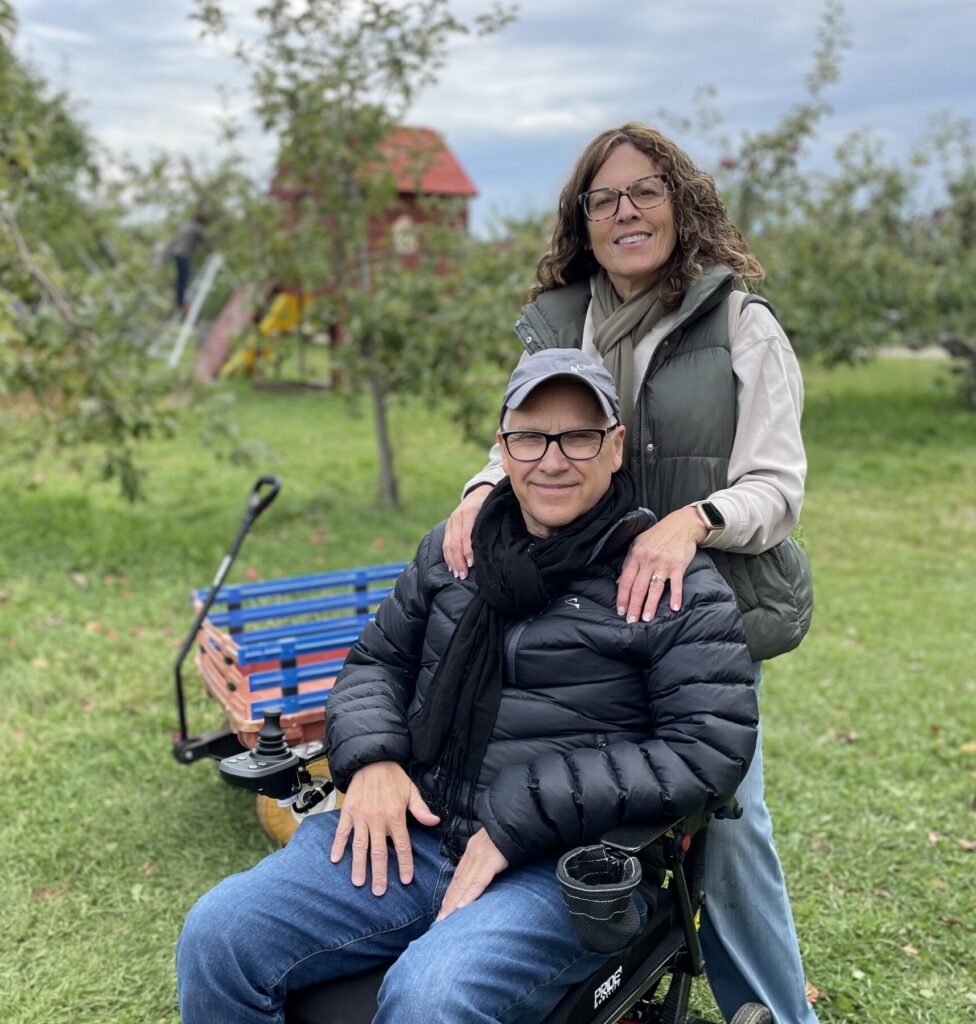
Faced with this reality, she and her partner have chosen to take it one step at a time.
“There are some things we need to plan for, like equipment, but when it comes to the disease itself, I try not to anticipate too much. When you look too far ahead, it can become overwhelming.”
This perspective allows them to focus their energy on the present moment rather than on the uncertainties of the future. Activities, trips, family outings, or shows: every opportunity to create memories becomes precious.
Preserving the relationship behind the role of a caregiver
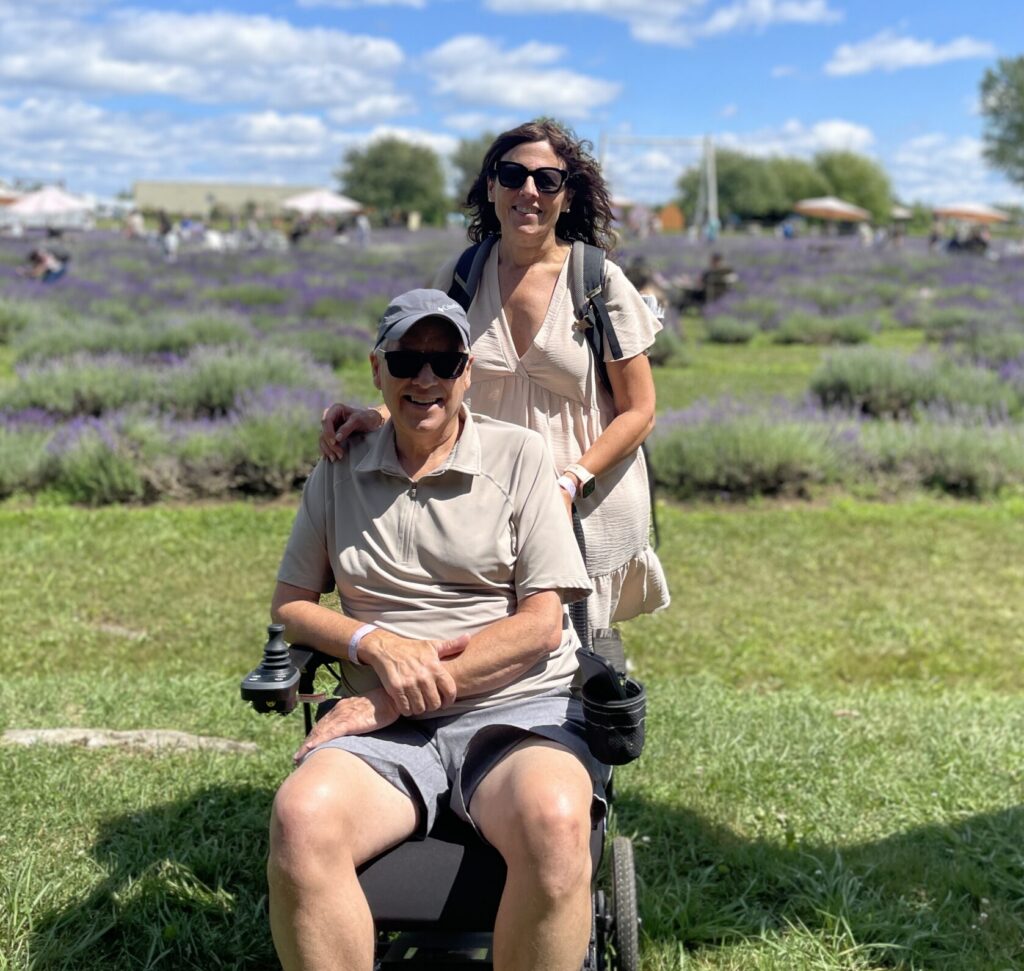
Nathalie and Sylvain have been together for over forty years, and their close bond remains at the heart of their relationship. Their roles may have changed over time as a result of their circumstances, but they remain, above all, a close-knit, devoted and loving couple.
“I don’t want to become his nurse. I want to remain his wife.”
Although Nathalie helps Sylvain with many daily tasks, their relationship is not limited to caregiving. They continue to take the time to talk, laugh, cuddle, go out when they can, and enjoy life together.
For them, as for many families touched by ALS, it is important to preserve what brings them together. Holding on to these moments of togetherness allows them to stay close and maintain a sense of balance.
The often unseen fatigue of caregiving
The role of a caregiver is often associated with selflessness, dedication, and unconditional love. While these aspects are certainly part of the journey, they are also accompanied by a side that is often less visible: exhaustion.
“The fatigue is extreme,” Nathalie admits.
Whether physical or emotional, this fatigue is part of daily life for many caregivers. Yet it can sometimes be difficult to talk about it openly. It is very real and deserves to be acknowledged and understood.
Accepting help and taking care of yourself
Over time, Nathalie realized that she couldn’t handle everything on her own.
“One of the biggest challenges I’ve faced is accepting help and taking time for myself.”
This realization led her to pay greater attention to her own well-being. Continuing to take classes that interest her, getting out of the house, or simply taking some time for herself have become important ways for her to maintain her balance.
The desire to care for one another is mutual within the couple. Despite his illness, Sylvain continues to look out for Nathalie’s well-being and encourages her to slow down when necessary.
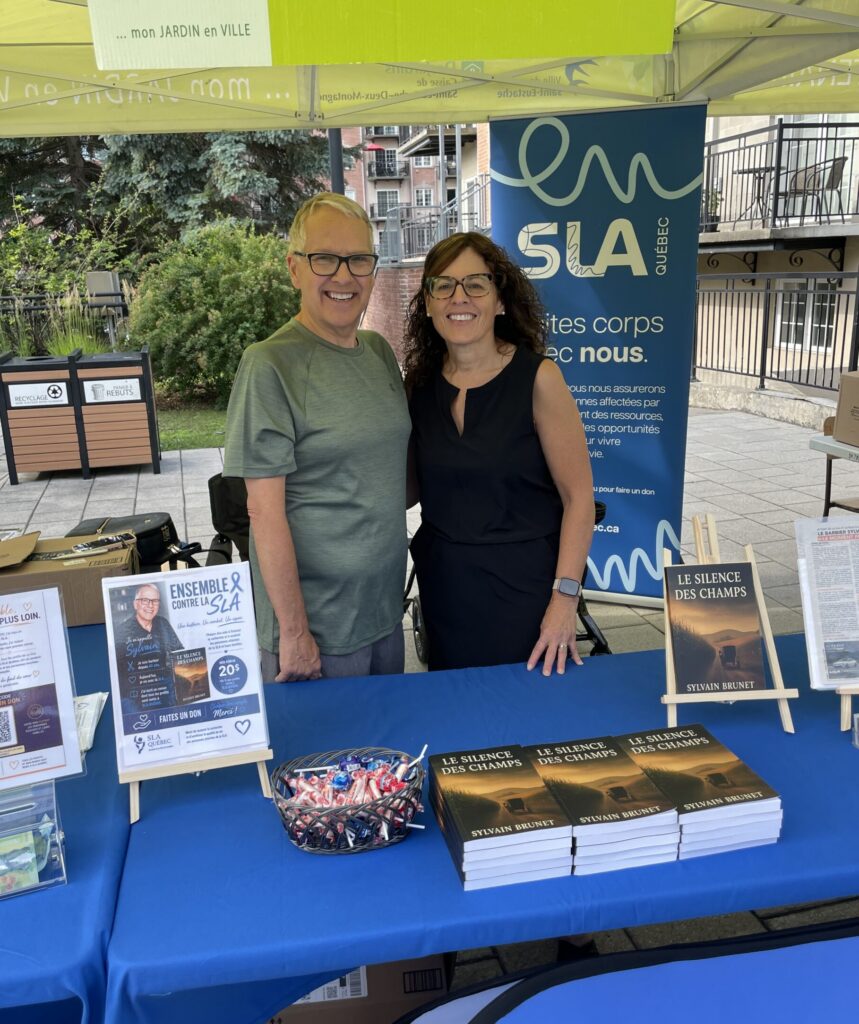
Nathalie also emphasizes on the importance of the support she receives through the ALS Quebec support groups and her conversations with other couples, like hers, touched by ALS. These connections remind her that she is not alone in facing this reality, providing comfort, hope, and opportunities to build meaningful relationships.
Supporting caregivers in their role: services and resources
Nathalie’s story reminds us that being a caregiver is about more than providing daily care. It also means learning to adapt, reaching out for support when needed, taking care of yourself, and nurturing a relationship that goes beyond caregiving. Because beyond the disease, love and human connection remain the strongest forces of all.
If, like Nathalie, you are caring for a loved one, don’t hesitate to make use of the resources available to support you throughout your journey.